


Artwork can come in many forms, from prints and framed pieces to paintings, ceramics, pottery, sculptures, and other handmade items. While the same basic packing principles apply to most parcels, artwork often needs more attention because it can be fragile, odd-shaped, or easily marked during transit.
If you are sending artwork through a standard post or courier network, the goal is to protect the piece properly and choose a service that suits the shipment. This guide explains how to package artwork safely, what materials to use, why a double corrugated cardboard box is the safest option for shipping.
In this article, you’ll find:
- Can You Send Artwork by Post or Courier?
- What You Need to Pack Artwork Safely
- How To Package Artwork For Shipping
- Packing Flat Artwork such as Prints, Paintings, and Framed Pieces
- Packing Ceramics, Potterym Sculptures, and Other Fragile Artwork
- Send Artworks Overseas
- Choosing the Right Service for Artwork
- How Interparcel Can Help with Sending Artwork
- Final Details To Check Before Sending Artwork
- FAQs
Can You Send Artwork by Post or Courier?
Many types of artwork can be sent by post or courier, but whether the shipment is suitable depends on the piece itself. Flat artwork, such as prints, photographs, and some framed pieces, may be easier to send through a standard network, while ceramics, pottery, sculptures, and artwork made from different materials usually need much more protection.
The main thing to understand is that artwork should not be treated like a loosely wrapped item. If it is going through a normal courier network, it needs strong outer packaging, enough cushioning, and a secure fit inside the box
What You Need to Pack Artwork Safely
Before you put anything in a box, you’ll need some items to help you pack art safely. Here are the essential tools:
- Packing tape
- Tape gun to apply the packing tape
- Artist tape/ Masking Tape
- Scissors or Stanley knife
- Cardboard corners for the frame
- Measuring tape
- Glassine
- Bubble wrap
- Brown paper
- Gloves to handle the art
- Foam or blanket
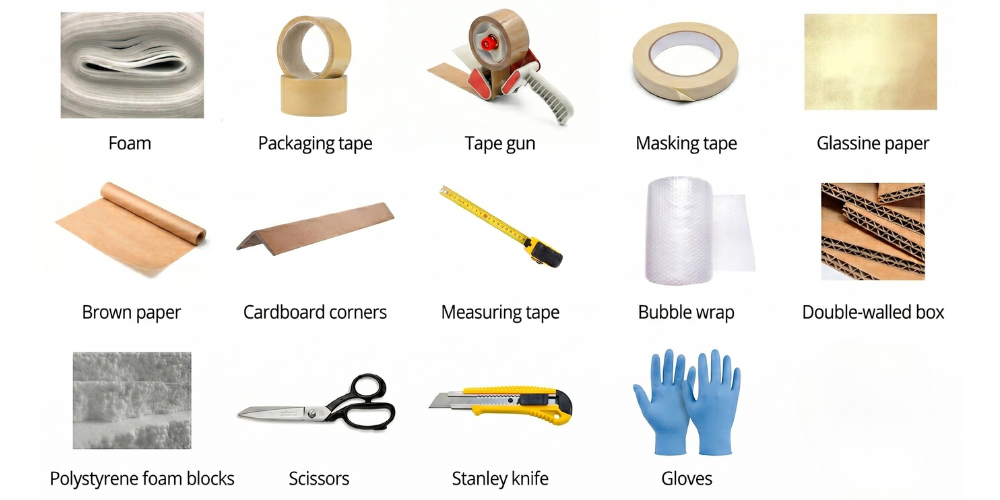
The exact materials you need may vary depending on the type of artwork you are sending. For example, a flat print and a ceramic sculpture will not need the same setup. But in most cases, strong cardboard outer packaging, internal cushioning, and careful handling are essential.
How To Package Artwork For Shipping
Every shipment should be wrapped properly inside a sturdy double corrugated cardboard box with enough internal cushioning to reduce movement and absorb impact during transit. Good packaging is one of the most important steps in avoiding damage, delays, and extra handling issues.
- Use a box that suits your size and weight of piece.
- Wrap the artwork well, protect corners and edges, and fill any empty space with cushioning material such as bubble wrap, foam, or other protective filler so the item stays secure inside the box.
- All shipments should be well-packaged inside cardboard packaging rather than sent loosely wrapped, as outer wrapping alone does not provide enough protection through the courier network and can increase the risk of damage or other issues during transit.
- Adding a fragile sticker does not mean the parcel will be handled carefully throughout the courier network. Parcels still move through standard handling and sorting processes, so the packaging itself needs to be the real work of protecting the item.
In some cases, fragile labels may also result in an extra handling fee depending on the service or shipment type. That is why it is important not to rely on stickers alone. The safest approach is to package the item properly from the start, rather than relying on a fragile sticker for extra care.
If you are sending bulky or odd-shaped items, read our blog article on how to ship odd-shaped items for more detailed packaging advice.
Packing Flat Artwork such as Prints, Paintings, and Framed Pieces
Flat artwork is often easier to box than three-dimensional pieces, but it still needs proper surface protection. Prints, paintings, and framed artwork can be scratched, bent, cracked, or dented if they are not packed securely.
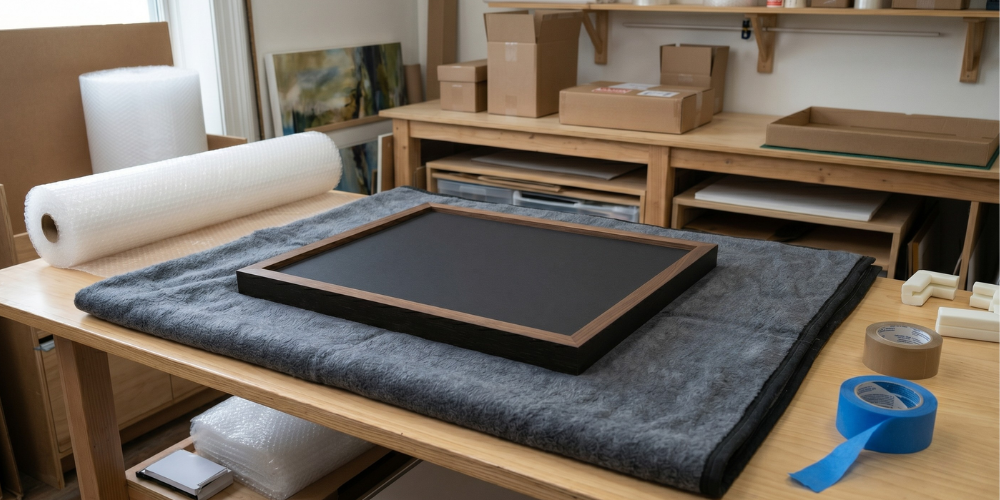
1. Prepare a Safe Packing Surface
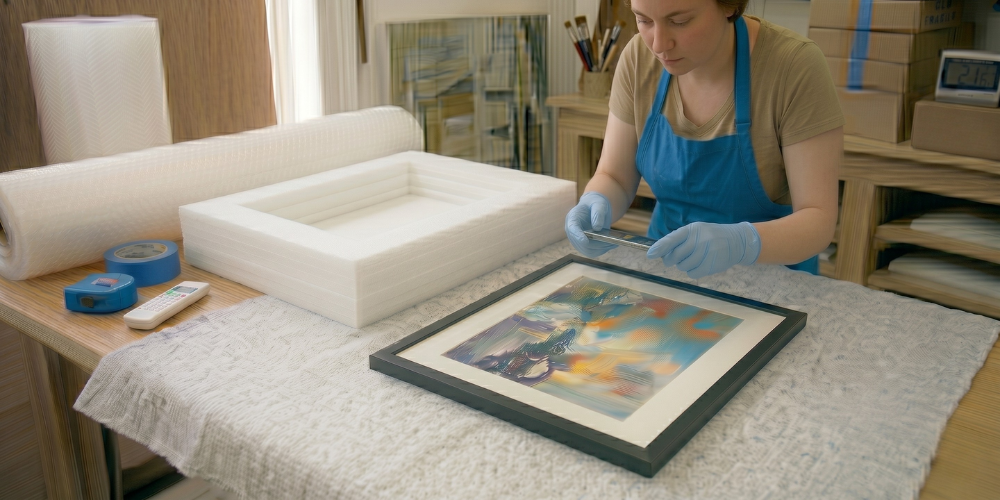
Put some foam or a blanket on your table. This will protect your artwork when you place it face down.
This helps reduce the chance of surface marks while you are getting the piece ready.
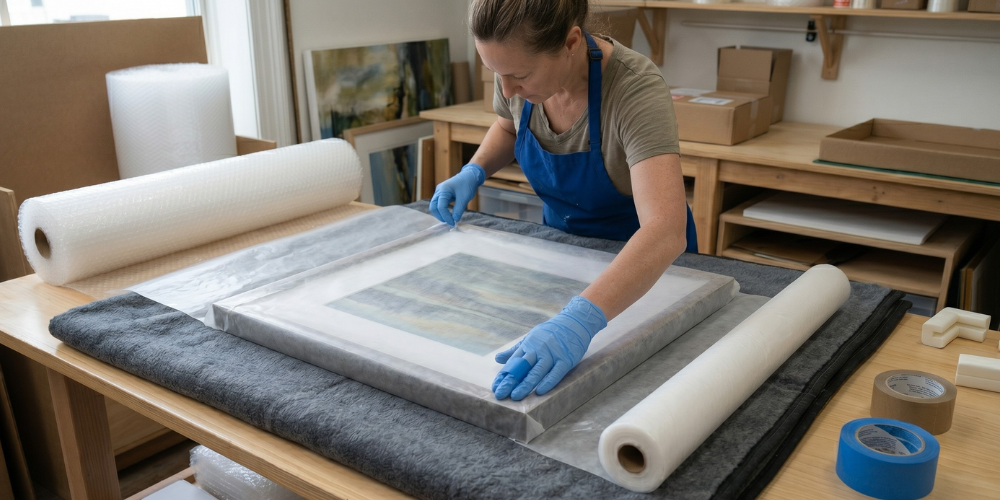
2. Protect the Front of the Artwork
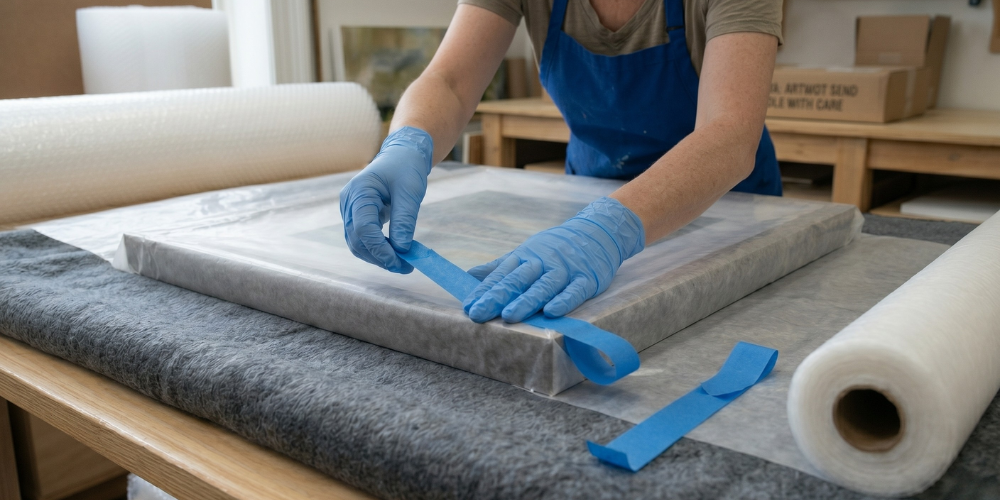
Next, roll out a sheet of glassine paper on top of the foam or blanket. Then, carefully place your artwork face down on the glassine, leaving enough space to fold the paper around the edges.
Glassine is useful because it helps protect delicate surfaces without sticking to the artwork. Once the artwork is positioned properly, fold the protective layer neatly around it and secure it gently.
3. Secure the Protective Wrapping
Now it's time yo use the artist tape/masking tape. A neat little trick is to fold over the edge of the tape, so it creates a handle. When your customer is unpacking and needs to remove the tape, they can pull on the tab to take it off easily.
This is a helpful detail, especially for pieces that need careful wraping.
4. Add Cushioning Around the Piece
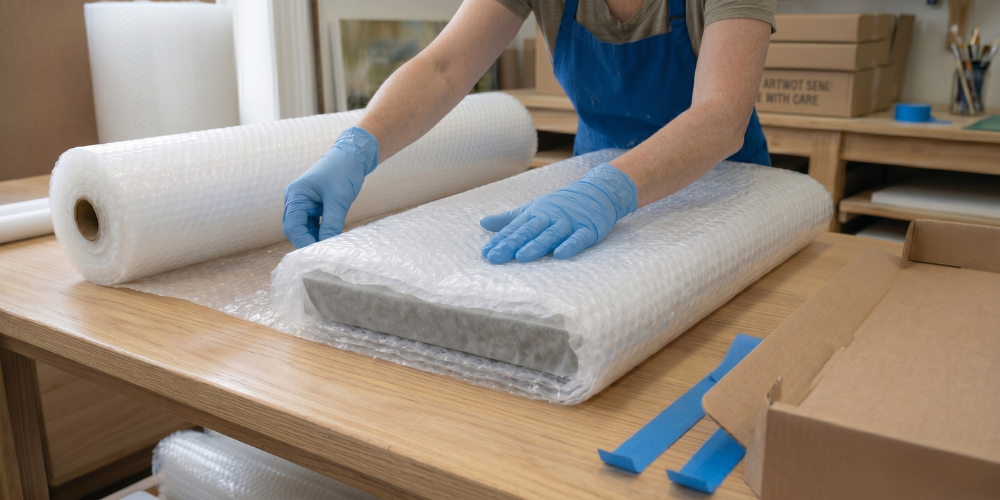
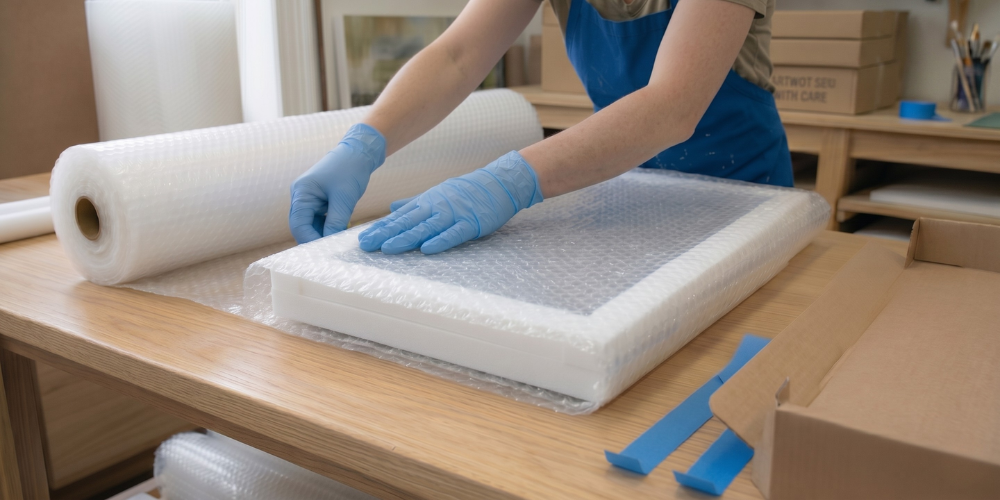
Time for bubble wrap. Always use the smooth side of this material against your painting. The raised side may leave an impression of the art.
Wrap the piece carefully and make sure the cushioning extends beyond the edges so the artwork has protection on all sides. For flat artwork, the aim is to reduce surface pressure and stop the piece shifting around inside the box. For extra padding, you can use corner foam protectors to help protect the edges and corners of the piece.
You want at least five centimetres of padding around the work. But this does depend on the width of the box you're using and if you're packing more than one piece of art. So continue to wrap until it matches the width of your packing box. Use your measuring tape to be certain.
5. Box the Artwork Properly
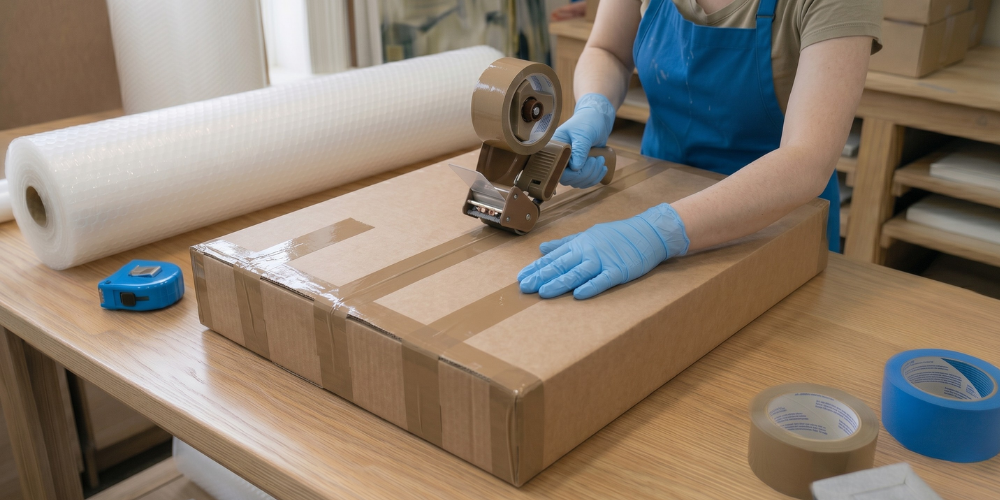
Put your box together and put at least three pieces of packing tape across the base. It's also worth taping up all the seams. Remember, the art will likely get slid into trucks and depots, so you don't want any part of the box to get damaged.
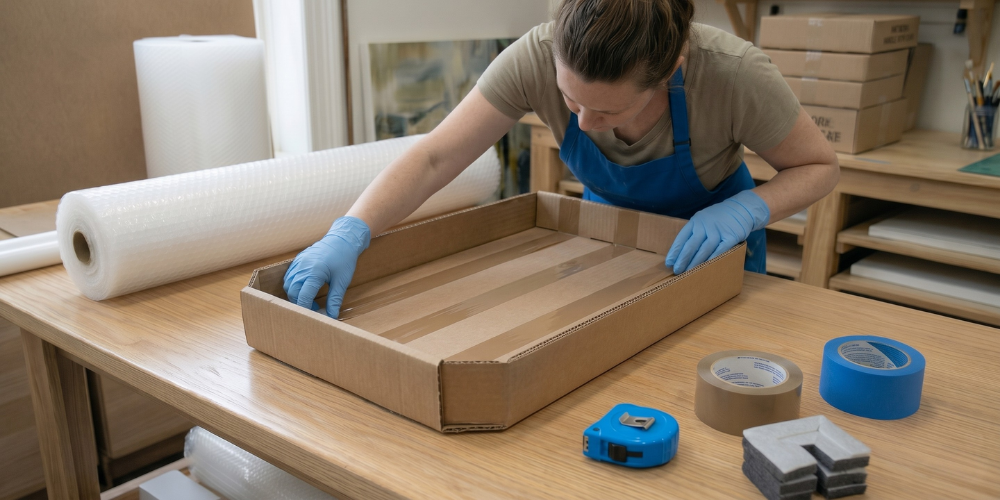
Once the box is ready, place the wrapped artwork inside and check for any movement. Add more cushioning if needed.
Place the art into the package and feel to see how much room you have on the sides. If you need more padding, insert pieces of bubble wrap until it's a tight fit. Add some on top if it's needed to. Then seal the box securely.
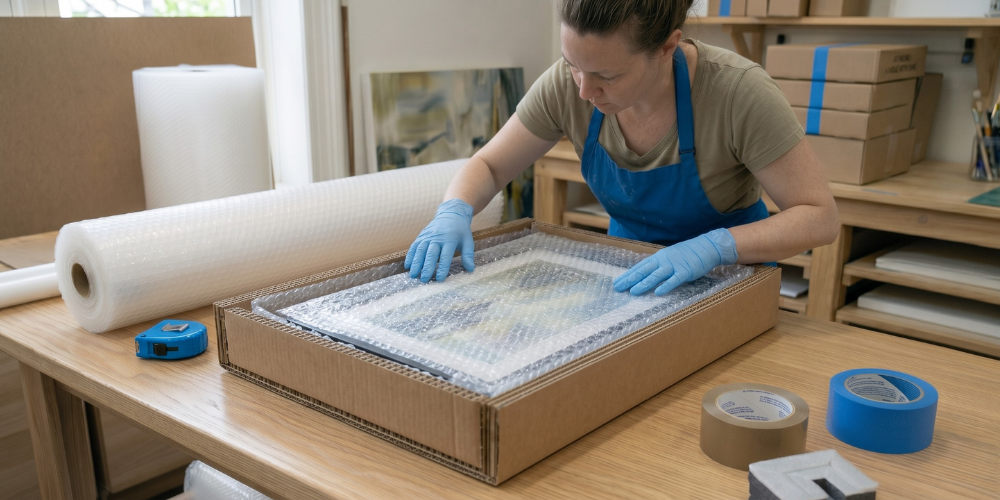
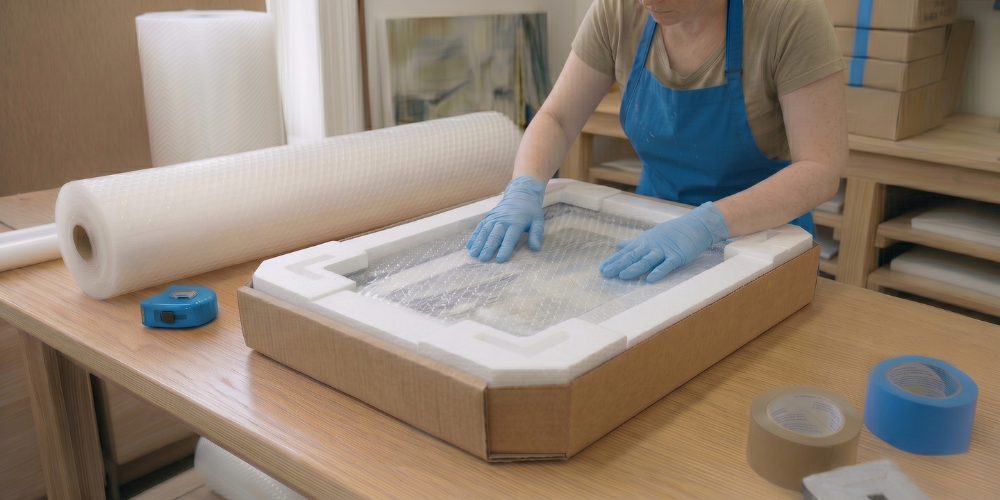
Close up the box and put at least three pieces of tape across the opening. Finally, tape up all the boxes' seams just like you did wih the bottom.
6. Consider Temperature, Humidity, and the Artwork's Condition
Some types of artwork need extra care beyond standard cushioning and boxing. Oil paintings and other fragile pieces can be affected by extreme temperatures or humidity during transit, which may lead to warping, cracked paint, or other surface damage.
Using polystyrene or foam sheets can also help provide thermal insulation. This can help keep the temperature inside the box more stable and give the artwork extra protection against sudden heat or cold during transit.
It is also worth checking the condition of the artwork before packing. Taking clear photos before shipment can help document the piece properly, especially if it is valuable or delicate.
7. Sending Prints
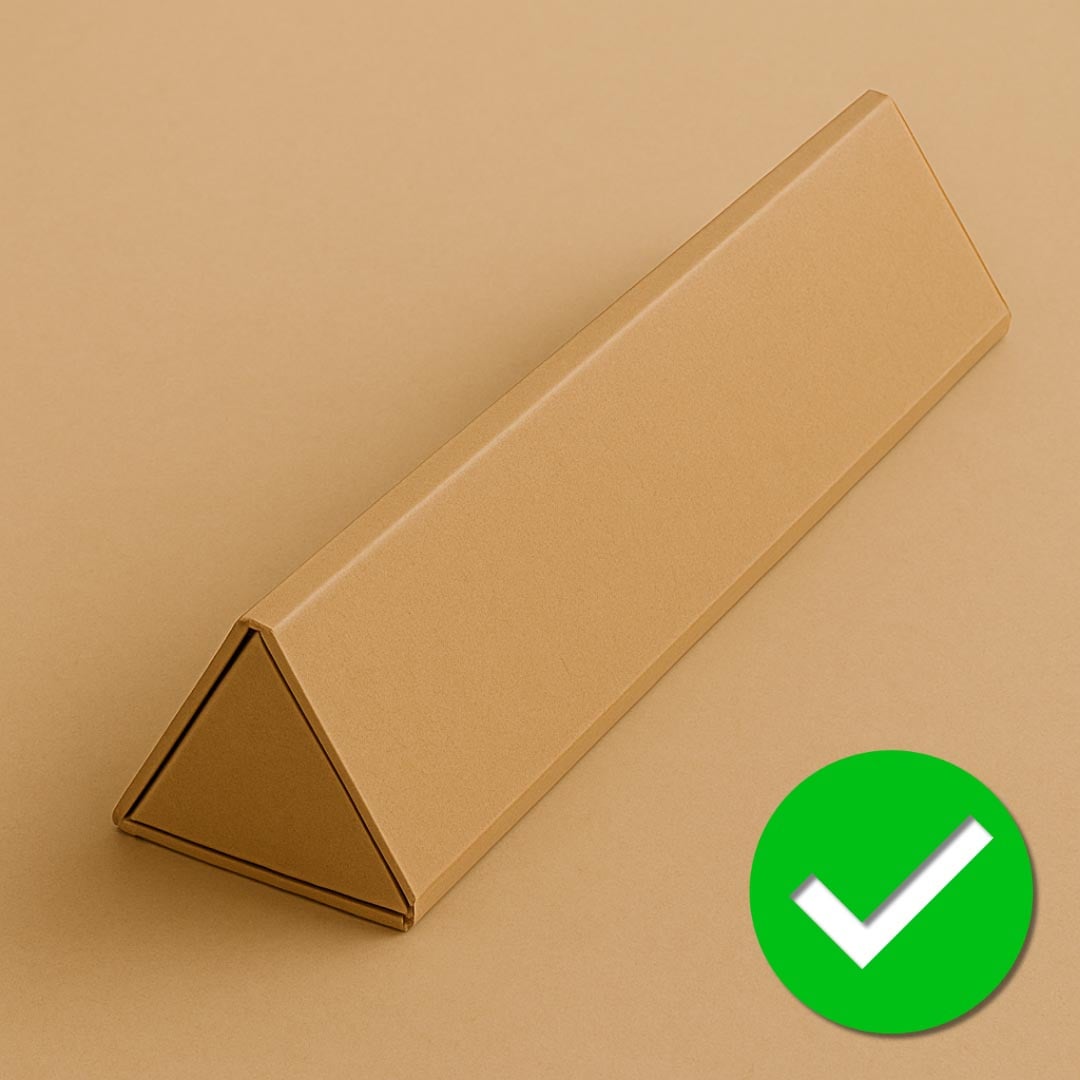
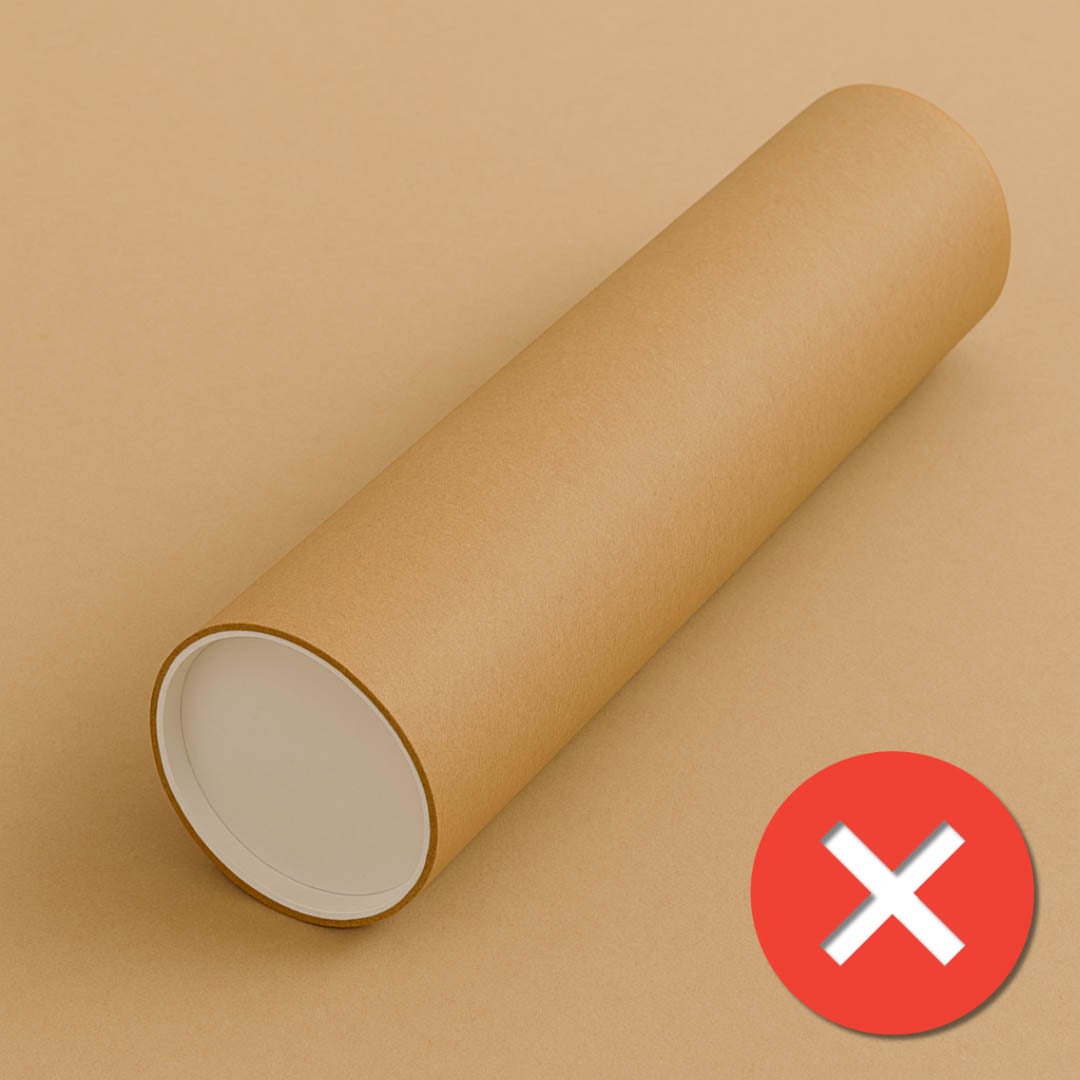
For items that tend to roll, such as blueprints, posters, or round items, use triangular cardboard tubes rather than cylindrical ones. Triangular tubes are more stable during transport, reduce the risk of rolling, and are less prone to damage in automated handling systems.
Packing Ceramics, Pottery, Sculptures, and Other Fragile Artwork
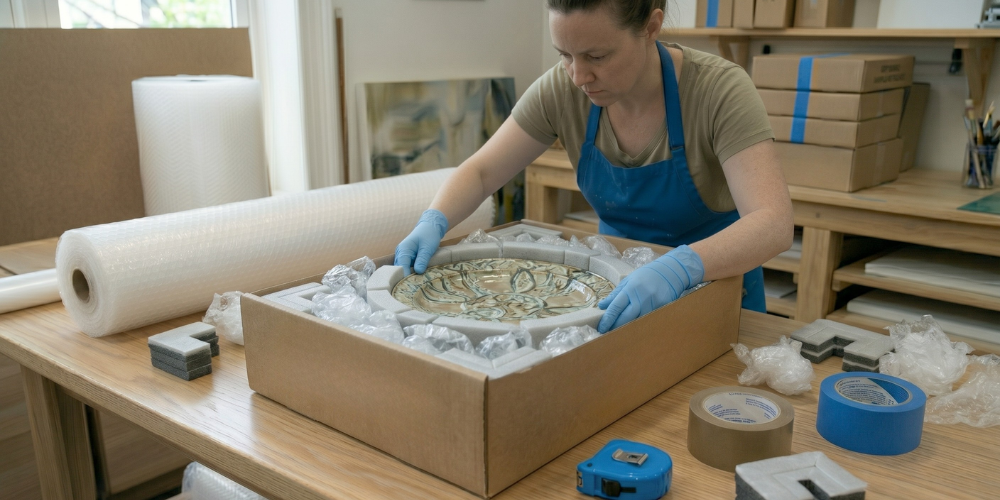
Three-dimensional artwork needs a different approach from flat pieces. Ceramics, pottery, sculptures, and handmade decorative pieces are often more exposed to impact because they can have handles, thin edges, uneven surfaces, or delicate projections.
For this kind of artwork, the key is to create enough protection around the whole object. That usually means more cushioning, more distance between the piece and the outer box, and a tighter internal fit so the item does not move during transit. Fragile areas should be protected first, then the full piece should be supported evenly inside the box.
Send Artworks Overseas
When sending artwork internationally, the shipment will involve customs paperwork, duties and taxes, and the regulations of another country. Before booking, make sure you know the country of origin, the destination country, the material of the piece, and whether any rules apply in either location.
You should also provide an accurate item description, declare the value correctly, and check whether the destination country has any restrictions on the type of material you are sending. These details can affect customs requirements and whether the item can be sent at all. The more accurate your shipping details are, the smoother the process is likely to be. Vague descriptions, poor packaging, or incorrect values can lead to customs delays or extra surcharges.
Choosing the Right Service For Artwork
The right service depends on the type of artwork you are sending, how fragile it is, and whether it is suitable for a standard courier network. Some pieces, such as art prints, smaller framed works, and other artwork that can be packed securely inside a sturdy double corrugated cardboard box, may be suitable for standard post or courier services.
Other pieces may need more than a standard courier network can offer. If the artwork is very high-value, one-of-a-kind original, highly fragile, or needs custom crating, installation, or extra handling care, a specialised fine art transport company may be the better option.
How Interparcel Can Help with Sending Artwork
Interparcel can help you compare, book and manage artwork shipments across multiple courier providers, all in one place. Instead of going to individual courier websites, you enter your shipment details once and receive real-time quotes from different carriers, making it easier to choose the service that suits your needs based on price, speed, or reliability.
If you are a business sending artwork to customers, Interparcel can also help streamline fulfilment as your order volume grows. Using a multicarrier platform gives you one central dashboard to manage shipments across different couriers, reduce manual work, print your shipping labels in bulk directly from the platform, and keep more visibility over deliveries. It also gives you more flexibility to adjust when one service is delayed, unavailable, or no longer the best fit for your shipment.
Because the platform has no subscription fees or lock-in contracts, businesses can access these tools without committing to ongoing monthly costs. Interparcel also integrates with major ecommerce platforms such as Shopify, WooCommerce, Wix, and eBay, making it easier to import and manage orders in one place.
Final Details To Check Before Sending Artwork
Before booking, make sure the artwork is packed securely, the box is the right size, the dimensions and weight are accurate, and the service suits the type of piece you are sending. Taking the time to check these details can help reduce the risk of damage, delays, or avoidable issues during transit.
It is also important to avoid using weak or reused boxes that may not hold up during handling. Thin or worn cardboard can provide less protection against punctures or crushing, especially for fragile or valuable artwork. If the piece is of high value, note that when sending art with Interparcel, it is classified as a restricted item, meaning transit warranty covers loss but not damage. So take clear photos of its condition before shipping, consider adding transit warranty to protect against loss, and think about whether a specialist art transport company may be the more appropriate option for particularly valuable or irreplaceable pieces.
Sending Art FAQ’s
Can you send the artwork by post?
Yes, many types of artwork can be sent by post if they are packed properly and suit the service. Smaller prints, lighter pieces, and some framed artwork may be easier to send, but they should still be packed inside a sturdy double corrugated cardboard box with enough cushioning to help protect them in transit.
How do you send artwork in the mail?
To send artwork in the mail, protect the surface first, add cushioning around the piece, and place it inside a strong cardboard box. Once it is packed, measure and weigh it properly, then choose a service that suits the size, weight, and destination of the shipment.
What is the best way to send art prints?
The best way to send art prints is to keep them flat, protected, and secure inside strong outer packaging. They should be packed in a sturdy cardboard box with enough protection inside to stop them from bending, rubbing, or moving during transit.
Can you send ceramics or pottery by courier?
Some ceramic and pottery pieces can be sent by courier, but as they are classified as a restricted item, transit warranty covers loss only, not damage. That said, they still need to be packaged well as they can break easily in transit. Use a sturdy double corrugated cardboard box, cushioning, and extra protection around any fragile or uneven parts. Before booking, it is also important to check our prohibited and restricted items list to make sure your shipment is suitable to send.
Do you need a specialist courier for artwork?
Not always. Some artwork can be sent through a standard post or courier service if it is packed properly and suitable for the network. But if the piece is very valuable, very fragile, oversized, or one of a kind, a specialised art transport company may be the better option.
How do you send artwork overseas?
When sending artwork overseas, the shipment will need customs paperwork and may involve duties, taxes, and rules from another country. Before booking, make sure you know the country of origin, the destination country, the material of the piece, and whether any rules apply on either side. It is also important to describe the piece clearly, declare the value correctly, and check whether the destination country has any restrictions on the material you are sending. Accurate shipping details can help reduce delays and extra charges.



 Facebook
 Twitter
 Instagram
 Linked In
 YouTube