


If you are shipping orders overseas, you have probably seen the terms DDP and DDU pop up. While they might look like technical logistics terms, they are actually just a simple way to decide who pays the customs bill when a package crosses a border. Mastering these two options is one of the easiest ways to ensure your business provides a reliable and seamless delivery experience for every customer.
If you are not familiar with the terms DDU and DDP, here is what they mean:
- DDU (Delivered Duty Unpaid): This means duties and taxes are charged to the recipient when the parcel arrives in the destination country.
- DDP (Delivered Duty Paid): This means duties and taxes are paid by the sender upfront as part of the shipment cost.
In this article, you will find:
- DDU vs. DDP: Which one is right for your business?
- How your delivery choice affects your post-purchase experience
- Wondering How Interparcel Can Support You?
- Need a Hand With Your International Shipment?
1. DDU vs. DDP: Which one is right for your business?
To help you choose the best path for your brand and your customers, here is a clear look at how these two methods compare side by side.
| Key Questions | DDU | DDP |
|---|---|---|
| Who is responsible for the bill? | Receiver | You (The sender) |
| When are the costs paid? | Once the parcel lands overseas | Upfront, during the booking process |
| Will it clear customs quickly? | Clearance may wait for the recipient's payment | Duties and taxes are prepaid to assist with faster clearance |
| What is the risk of a ‘return to sender’ or ‘abandonment’?* | High if the customer refuses to take action | Very low, as all costs are covered |
| How does it affect your customer service? | More “Where is my parcel?” queries | Support focuses on a smooth delivery experience |
*Some destinations do not allow return-to-sender (RTS), and if abandoned, charges may remain payable.
2. How your delivery choice affects your post-purchase experience
Building trust with your customers continues well beyond the checkout, lasting until the parcel is safely in their hands. Delivering an order without extra steps or unexpected fees is one of the most effective ways to show your brand's professionalism.
Because your shipping method directly impacts your post-purchase strategy, choosing the right one is essential for long-term growth. DDP offers an upfront payment experience that clears the way for a fast delivery. While DDU requires the customer to handle their own taxes at the destination, staying transparent about these choices helps you maintain a strong relationship so they shop with you again.
3. Wondering How Interparcel Can Support You?
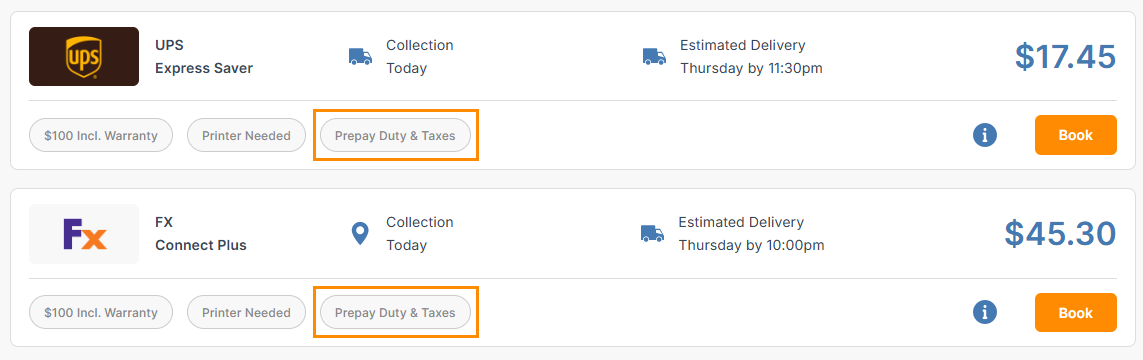
If you want to make international shipping as easy as possible for your customers, you can now choose to pre-pay duties and taxes upfront on the Interparcel platform when booking with FedEx Express and UPS.
How It Works On Our Platform
- Services with this feature have a ‘Prepay Duty & Taxes’ tag on the quoting page. This does not mean you must pre-pay duties and taxes. It simply shows that the service gives you the option, and you can still select that service even if you choose not to pre-pay.
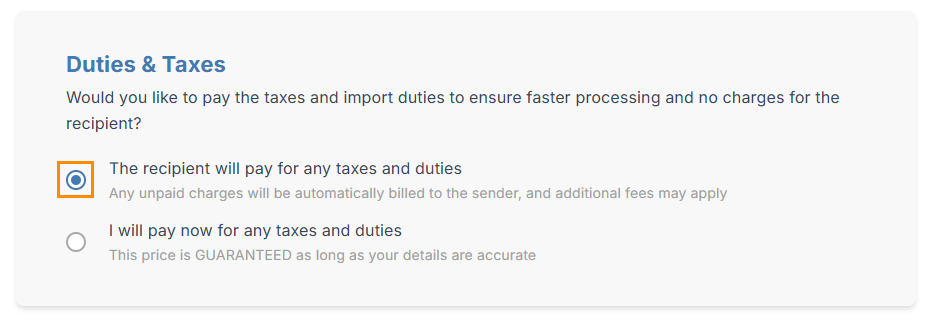
- You can choose who pays: the sender or the recipient. If you select ‘the recipient will pay’, the parcel may be held at customs on arrival until the recipient pays for the destination charges. If the receiver fails to take the required action, any unpaid charges will be billed to the sender, and additional fees may apply, including potential return-to-sender (RTS) or shipment abandonment.
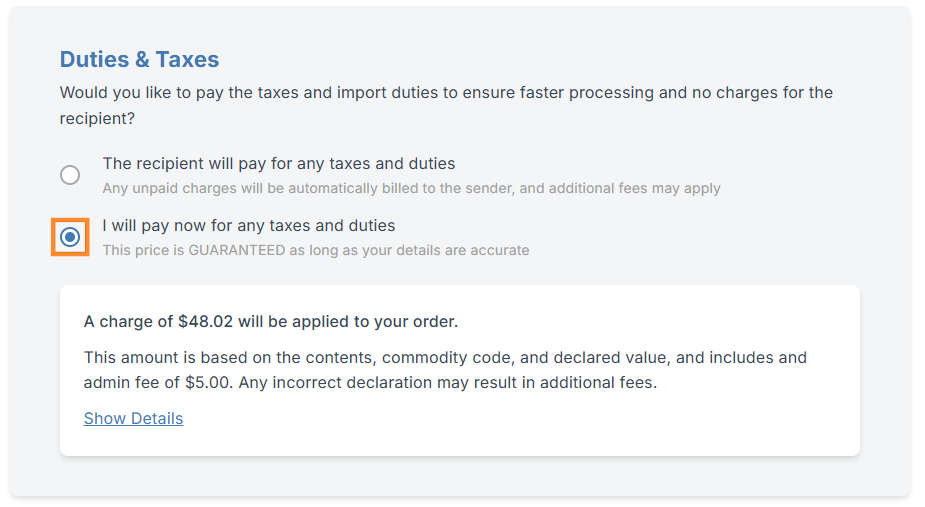
- If you select ‘I will pay’, the system will calculate and display the duties and taxes payable using the value of your shipment and content description.**
- You can click ‘Show details’ to view a full cost breakdown before you confirm. If you choose to pre-pay, the duties and taxes will be added to the total amount of your shipment.
Pro Tip: If you want to master your international shipping, ensure the receiver actively monitors the tracking, follows the carrier’s instructions regarding payment methods and deadlines, and provides any additional information required for customs clearance.
**There are countries where using DDP is either restricted, impractical, or effectively not permitted.
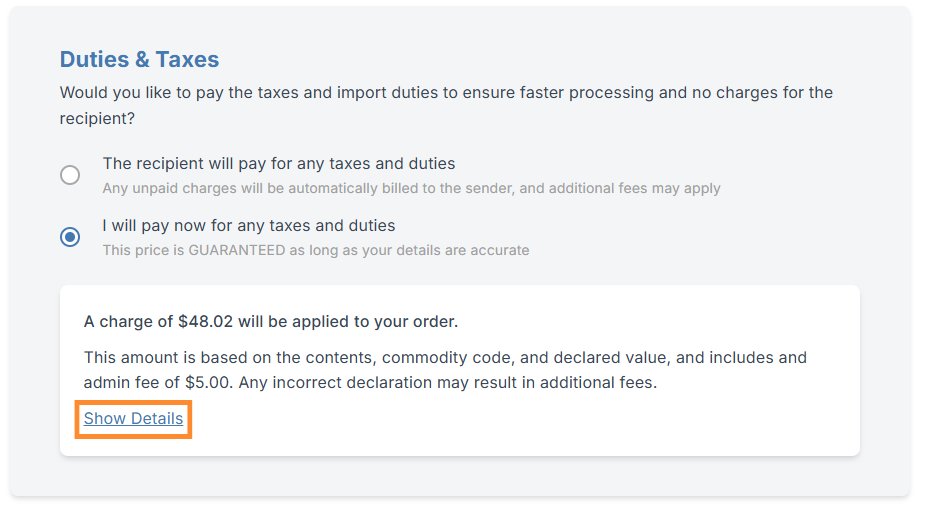
After reviewing your cost breakdown, finalise your booking as usual.
What Information Needs to Be Filled in Accurately For Duties and Taxes?
Duties and taxes are calculated using the information provided on your customs invoice. To ensure the correct amount is applied, it is important to complete these fields accurately:
- A clear and accurate item description
- The correct HS Code
- Quantity
- Value
- Country of manufacture
- Tax status
- ABN number
- Reason for export
Providing accurate details helps prevent parcels from being held in customs, avoids delays, and reduces the risk of return or abandonment, as some destinations do not allow return-to-sender (RTS), and if abandoned, charges may remain payable.
4. Need a Hand With Your International Shipment?
If you still have questions, we’ve put together a simple guide to help you with the process of sending an international order.
Our customer service team is also here to provide the right guidance along the way. If you need assistance with your shipment, feel free to call us on 1300 006 031, chat with us live on our website, or email help@interparcel.com.au.




 Facebook
 Twitter
 Instagram
 Linked In
 YouTube