


Do you want to offer free shipping, but worry it will cost your business too much?
You are not alone. Australian shoppers love free shipping, and the trick is finding the right way to cover the courier cost.
The good news is that you can offer free shipping and stay profitable. You just need a plan, whether that's adjusting your pricing, setting a spending threshold, or focusing on your best margin products.
Here's everything you need to get started:
How Australian Shopping Habits Are Changing, and What It Means for Shipping
The economy and inflation explain part of what's happening. Higher prices mean shoppers often spend less per order, but they make up for it by buying more often across the year. Australia Post's Ecommerce Report found the average online basket fell to $96 in 2025. But that's not the whole story. Shoppers also have more ways to shop than ever: more marketplaces, more sellers, and a growing habit of buying secondhand instead of new. That's why total online spending keeps climbing: more shoppers are buying across more channels, more often, and that adds up to more overall spending, even as individual orders get smaller.
Because of this economic pressure and easy access to AI tools, shoppers are also researching more before they commit to a purchase. IAB Australia found 69% of shoppers now research online before they feel confident buying. Six in ten also use AI tools while shopping, a figure that rises to 75% among shoppers aged 18 to 39.
By the time a shopper lands on your website, they already know everything about the product they were looking for. At that point, the shipping fee and how long delivery takes are often the deciding factor. Shoppers expect real choice and speed here too: 69% want a range of delivery options at checkout, 26% expect same or next-day delivery as standard, and free delivery is consistently ranked as their top delivery priority overall.
When a store doesn't meet these expectations on cost, speed, or choice, this is often where the sale is lost. Baymard Institute puts the average cart abandonment rate at around seven in ten, and 40% of shoppers say a disproportionate shipping fee is the reason they left. The strategies below can help you close that gap.
If you'd like to dive deeper into how consumer behaviour is changing, or work out the best shipping strategy for your business, check out our article on Australia's changing ecommerce landscape.
Is Free Shipping Right for Your Business?
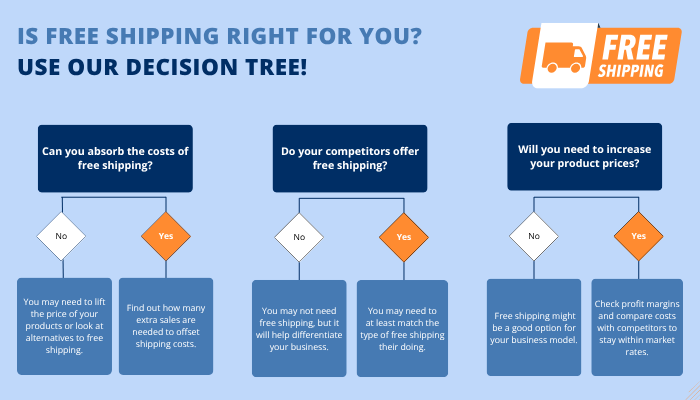
A few things decide whether free shipping is right for your business: your margins, your competitors, and what your customers expect. Use this table to check.
| Ask Yourself | Yes? | No? |
| Can you absorb the costs of free shipping? | Work out how many extra sales you need to cover the lower profit. If you can hit that number often, it's worth testing. | If your products are already low priced, this could mean selling at a loss. Try raising prices slightly, or look at the alternatives below. |
| Do your competitors offer free shipping? | You may need to match them, or compete in another way, like faster delivery or easier returns. | That's a gap you could fill. Offering it could set you apart. |
| Would you need to raise your prices to cover it? | Check your margins and competitor prices first. If your margins are healthy, this is a simple way to pay for it. | Your margins may already cover it. Just keep your longer term plans in mind too, like growing your range or shipping overseas. |
| Do your customers expect free shipping? | A high cart abandonment rate is often a sign shipping costs are putting customers off. | Check how your closest competitors handle shipping. If they don't offer it either, it's probably not essential yet. |
10 Ways to Offer Free Shipping
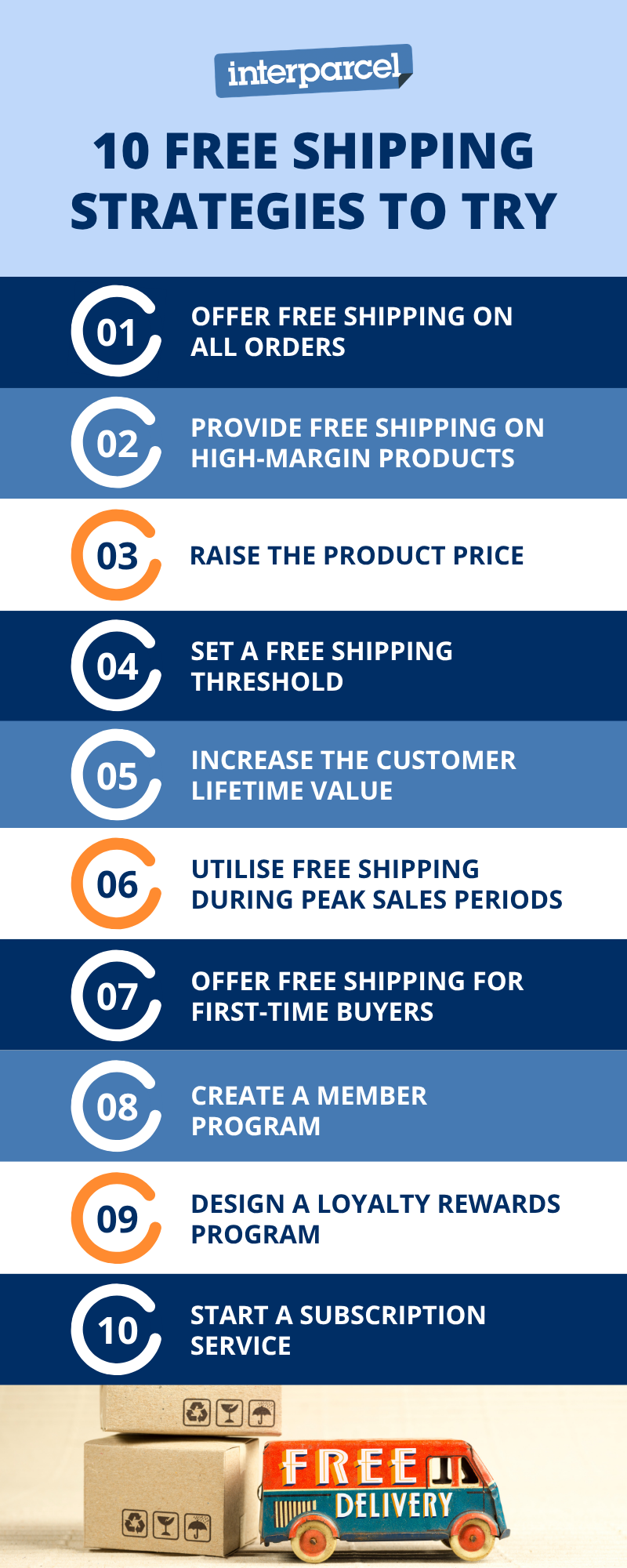
There's no single right way to do this. Here are ten approaches you can use. Pick whichever suits your margins and product range.
1. Offer Free Shipping on All Orders
The simplest option: free delivery on every order. Before you switch it on, check if your margins can absorb it, and work out how many extra sales you need to cover the cost. Then:
- Align free delivery with your long-term strategy, such as increasing your product range and scaling globally.
- Determine where your customers are located and budget your delivery costs accordingly.
2. High Margin Products Only
Offer free shipping only on your highest margin products, rather than everything. Go through your range to find which ones can absorb the cost. Packaging is worth checking too, as it's an easy place to lose margin without noticing. To find the right products, follow these steps:
- Review your profit margins to determine the best products eligible for free shipping.
- Forecast the long-term likelihood of margins being impacted by supply chain issues or disruptions.
- Determine the maximum margin impact your business can withstand by offering free delivery.
3. Build It Into Your Price
Some businesses fold shipping into the product price from the start, so it becomes a built-in feature rather than a discount. This is easier before launch. If you're already trading, compare your prices against competitors first, and watch how customers respond. Follow these steps:
- Compare prices and shipping with competitors to determine the best value offering.
- Monitor the drop-off in returning customers after raising the prices of your products.
- Review social media for any negative sentiment about the increase in prices.
4. Set a Free Shipping Threshold
A minimum spend threshold gives you extra room, since a bigger order covers the delivery cost more comfortably. It's common practice: three in ten Australian businesses already use one, and $51 to $100 is the most typical amount. Shoppers respond to it too: one in four will spend up to $10 more to qualify, and one in five will spend up to $20 more. Test what your average order value can realistically reach, then set your threshold there.
5. Invest in Lifetime Value
Look beyond the first sale. Some businesses accept little or no margin on a first order, betting that the customer keeps buying. Before you choose this approach, track how much customers spend over time, how often they buy, and how long they usually stay. Here's how to calculate it:
- Retrieve your company's total revenue over a specific period and divide it by the total number of orders made by customers during that timeframe to get the average order value.
- Find the total number of purchases made and divide it by the count of unique customers to get your average purchase frequency.
- Determine the average number of years a customer continues to purchase from your company to work out the average customer lifespan.
- To get the customer lifetime value, multiply the average order value by the average purchase frequency by the average customer lifespan.
6. Save It for Peak Sales Periods
Instead of offering free delivery all year, you can reserve it for special events. You can then use it in promotions and as an extra reason to convince customers to complete their purchase. For example:
- Black Friday and Cyber Monday are two of the year's busiest shopping days.
- Boxing Day sales are another popular shopping event for people who didn’t get what they really wanted for Christmas.
- Don’t forget days like Mother’s Day, Father’s Day and Valentine’s Day. You may even want to offer free shipping on the anniversary of the opening of your online store.
7. First-Time Buyer Offers
Free shipping is often a stronger incentive than a discount for a first-time buyer. Here's how to make it work:
- Collect an email address to validate the customer is a first-time buyer before providing a code to activate free shipping.
- Send an abandoned cart email to remind first-time shoppers they haven’t completed their checkout. Include a code for free shipping to win them back.
- Offer free shipping for new customers for their second purchase to encourage them to return to your online store.
8. Create a Member Program
A paid membership swaps a shipping fee for a subscription fee. In return, customers get free delivery plus other perks, such as:
- Early access to new products and offerings.
- VIP experiences on Black Friday and Cyber Monday.
- Exclusive discounts during peak sales seasons.
But note that what you charge depends on what's included: a membership that only covers shipping usually costs less than one that also includes ongoing discounts throughout the year.
9. Design a Loyalty Rewards Program
Rather than a membership fee, reward repeat customers directly. You can try:
- Free shipping on every 5th purchase.
- Free deliveries after a specific dollar amount is spent.
- Free shipping for multiple referrals to your online store.
A loyalty program typically costs less overall than offering free shipping to everyone.
10. Start a Subscription Service
You can even include free shipping when customers sign up for a subscription service. The benefit of this approach is that you already know the order frequency and value in advance. So it's easy to build the delivery cost into the price from the start. Think about:
- Monthly or quarterly refills on popular items such as makeup, clothing, or wellness materials.
- Monthly coupons for deals on your store. For example, 10% off, two-for-one deals, or free shipping on orders over a set dollar amount.
- Send a collection of sample products monthly to encourage customers to purchase the larger item. You could offer free shipping if they buy it to help increase conversions.
3 Hassle-Free Shipping Solutions
There's more than one way to make delivery feel good to your customers. These three options work well on their own, or alongside any of the strategies above.
1. Free Returns
This matters almost as much as free delivery for some customers, especially with clothing that needs to be tried on. Check your return rate and margins before you commit, as a high return rate can cost about as much as free shipping would.
2. Flat Delivery Rate
You charge the same amount no matter what's in the cart, so there's no surprise at checkout, even though the customer is still paying something. This can reduce cart abandonment, since customers know their delivery cost before they reach payment.
3. Live Shipping Rates
Instead of a flat guess, the customer sees the real cost of delivery based on the size, weight, and destination of their order, with a choice of delivery speeds.
If rising courier costs are already making your margins tight, read our guide on managing inflation and surcharges next.
How Interparcel Can Support Your Shipping Strategy
Whichever approach you choose, the right tools make it easier to run without adding to your workload.
- Rule Manager: Set rules based on factors like order value, weight, destination or courier preference, so once your shipping strategy is set up, it keeps running automatically, so you don't need to manage every order manually.
- Smart Boxing: Uses an algorithm to select the most efficient box size for each order, so you're not paying to ship air. That gives strategies built around protecting your margin, like offering free shipping on your best margin products only, or covering a threshold, more room to work with.
- Live Shipping Rates: Shows real time rates and transit times at checkout, based on the size, weight, and destination of the order. It's available at no cost for Shopify and WooCommerce stores on the Interparcel platform.
- Branded Tracking: Lets you customise the tracking page with your own colours, logo, and upselling banners, improving the post purchase experience whichever strategy you're running, and giving you another chance to promote to a customer who's already purchased.
Interparcel also gives you access to 19+ courier services on one platform, with no subscription fees or lock in contracts. Automating your fulfilment process with our smart tools cuts down manual entry and saves you time, while comparing rates across couriers helps you spend less on shipping itself, adding real value and savings alongside the strategies above.
Choosing the Right Strategy for Your Business
Compare your delivery costs to businesses your own size in your industry, rather than a much larger competitor. Their numbers are a more realistic benchmark, since their margins and budget are closer to yours.
Want a hand choosing? Book a call with our shipping experts to talk through your options, or create a free Interparcel account and start exploring the tools that can enhance your shipping strategy. Already on the platform and want help setting it up? Our platform set up guide covers the basics, and the team at shippingtools@interparcel.com.au can help with anything technical.
FAQs
Is it worth offering free shipping?
For most small businesses, yes, especially since unexpected costs at checkout are consistently the leading reason Australian shoppers abandon a cart, according to Baymard Institute. But it's only worth it if you plan for the cost, through pricing, product margins, or a minimum order value, rather than absorbing it outright.
Does free shipping increase sales?
Often, yes, mainly because it removes the moment a customer sees a shipping cost that feels too high for their order and leaves. How much it helps depends on your industry and price point, so test it on a specific product range, or above a certain order value, before turning it on for your whole store.
What are the drawbacks of free shipping?
The main risk is that it quietly reduces your profit if you haven't planned for the cost. Offer it without adjusting your prices, packaging, or order minimums, and you may lose money on smaller orders. It can also become something customers expect, and that's hard to change once they're used to it.
How do I offer free shipping without losing money?
Build the cost into your product price, set a minimum order value, limit it to your best margin products, or save it for peak sales periods and loyal customers. Cutting your actual shipping cost through better packaging or by comparing courier rates helps too.
What's the cheapest way to ship in Australia?
It depends on the size, weight, and destination of what you're sending, so there's no single cheapest courier for every order. Comparing rates across multiple couriers, rather than sticking with one, is generally the most reliable way to keep costs down.
Is free shipping really free?
No, someone always pays for it. It's usually built into a slightly higher product price, covered by a minimum spend, treated as a cost of winning the sale, or offset by savings elsewhere, like more efficient packaging or better courier rates.




 Facebook
 Twitter
 Instagram
 Linked In
 YouTube